

As part of the 2026 Ocean Alkalinity Enhancement Joint Learning Opportunity, two climate communicators (Sean Kelly and Pam Sullivan) are helping foster cautious optimism on the benefits ocean-based carbon removal offers.
Our OAE communications work has two components:
1) Ocean Alkalinity Enhancement (OAE) public storytelling (through written stories and podcasts). This content is available at https://www.climatestoriesatlantic.ca/ocean-climate-solutions.
All stories are copyright-free and shareable -- please help spread the work on your social platforms, newsletters, and blogs.
2) Communications/messaging analysis, to add to the communications discourse underway in the OAE sector.
The reflections on this page summarize this exploration of carbon removal communications.
What follows are reflections and thoughts not from a carbon removal scientist but from Sean Kelly, a public communicator/educator active for decades in the environment and climate change sectors. This paper contributes to the critical communications work underway across the Carbon Dioxide Removal community. It also endeavours to situate OAE communications within a broader context of talking about climate change writ large.
This communications work is supported by the Carbon to Sea Initiative, the Marine Environmental Observation, Prediction and Response Network (MEOPAR), and Planetary Technologies.
A. Previous Ocean Alkalinity Enhancement communications & messaging recommendations
Many organizations active in Marine Carbon Dioxide Removal (mCDR) are exploring messaging in the carbon removal space and improving OAE public communications practices. There has been excellent research and analysis of communications and engagement to date. Three prominent examples are:
1. New Bridge Strategy Communications Guidance on behalf of Carbon to Sea.
Key Recommendations:
Explain basic OAE concepts in public communications.
Do not assume that citizens and key policy stakeholders understand ocean acidification.
For public communications, be careful with technical language.
Frame OAE as a solution that will help both ocean health and address climate change.
However, any ocean health co-benefits must be scientifically supported. New Bridge noted that many experts are rightfully cautious about how OAE can be scaled to have a broader impact on acidification, recommending restraint in selling OAE as a solution to that problem.
Stress the controlled and carefully reviewed research in the sector, to alleviate public safety concerns.
Avoid talk of chemicals; instead, speak of minerals or, even better, natural minerals.
Focus on the health of ocean waters and positive impacts on fish/sea life.
Connect the co-benefits of OAE to fish and oceans to the economic impact of traditional livelihoods that rely on them.
2. Planetary Community Engagement Report (Tufts Cove, N.S., and Elizabeth River, Virginia)
While not directly about communications, this report highlights key attributes that OAE organizations and businesses should incorporate in their work to ensure ethical impact. There are lessons for communication efforts from, as the report says, a healthy ‘trust balance sheet.’
The report highlights Planetary’s efforts to build trust, collaborate, and co-create climate solutions with communities, Indigenous nations, and organizations.
Insights include:
Focus on economic benefits for local communities.
Ensure Indigenous engagement & oversight and strengthen formal partnership pathways.
Meet communities where they are, including site tours, local gatherings, and community-specific digital platforms.
Integrate community feedback into project monitoring
Maintain ongoing dialogue with environmental groups, fisheries, and civic institutions to ensure responsible project development.
Incorporate opportunities for youth education linking restoration science with workforce awareness and environmental literacy.
3. Ocean Visions and Wonder: Strategies for Good message guide for stakeholders working to advance ocean-based climate solutions.
Key Recommendations:
Align with values: Messaging and communications must align with the values that our audiences hold dear around climate change and the ocean, including that climate change is already here, causing harm, and that we must actively pursue every solution possible.
Manage complexity and fear: It is important that our communications help our audiences manage deep skepticism and the range of concerns they hold around ocean-based climate solutions.
Activate support: Activating support can be achieved by demonstrating the roles that our audiences have in being part of the solution.
B. Challenges when talking about climate change
OAE exists in response to ocean/marine health and acidification, but, of course, climate change was the instigator of this form of planetary action. And the biggest threat to our oceans remains climate change. Therefore, it’s useful to situate marine-based climate solutions within the broader context of climate change communications.
For those who recognize the threat of climate change (this is not a strategy for dealing with deniers), it can be both frightening and complicated. It can lead to climate anxiety or climate apathy. You could argue that our main challenges are not technical — many solutions already exist, albeit not at a planetary scale — but also political, educational, and operational. We need to do a better job at talking about climate change in a way that is empowering, not overwhelming.
How does this directly relate to OAE?
Some might think it’s too late, so why risk the oceans in the near-term?
If human activity caused the bulk of climate change, why would we think we can now successfully meddle in oceans? Is this more human hubris?
Just like talk of climate adaptation, is this distracting us (and our money) away from reducing GHG emissions? Is the ‘bang for the buck’ there for mCDR?
Here are several specific challenges we face when talking about climate change, obstacles to keep in mind when discussing OAE:
> For many people, climate change represents a trade-off between short-term and long-term problems. People conceptualize things that are psychologically distant from them (in time, space, or social distance) more abstractly than things that are mentally and physically close. Climate change, as a concept, struggles to overcome human psychological biases against threats that appear distant in time and place. (Although, unfortunately, threats from climate upheaval are no longer that far off.)
As a result, many people are not forced to grapple with the specifics of climate change but rather can treat it as an abstract concept. Abstract concepts simply don’t motivate people to act as forcefully as specific ones do. And the help brought on by solutions will not be seen until much later. Humans are well adapted to respond to immediate threats but slow to accommodate moving change. Climate change is a process, not a singular event.
> People often form (and reinforce) opinions based not on the science, but through social interactions with peers, emotional stories, values, etc. We also live in an era with active misinformation on climate change and many issues. This is why trust in ‘sources’ is critical.
Research (and our own eyes) show that people are more likely to do things when they see others doing them, even if it contradicts what they know is logically correct. Perceptions, including those of the messenger, must be dealt with before audiences can deal with the facts.
> People perceive issues that receive more news coverage to be more important as well. But climate change can be difficult to cover. As a BBC correspondent once said, “Journalism wants events. We need clear causes, we want a narrative of baddies and goodies. But where the climate is concerned, things are slow-moving, complex, and what’s more, we might see ourselves as the bad guys. That’s not something listeners and viewers want to be told.”
> Harm from climate change engages our ‘moral’ brain, and many look for ‘enemies’. But, simplistically, climate change can seem to lack clear opponents: we all contribute to this problem, and all stand to suffer the impacts. We interpret climate change solutions through frames, which focus our attention but limit our understanding, which allows us to exclude or ignore meanings that lie outside the frame.
We often assume that more facts (and we’ve never had more information available) would lead to understanding and awareness. However, the myriad of facts can also help us easily pick the ones we need to bolster our argument (even if they are wrong). This is sometimes called ‘motivated reasoning’.
> Climate change can lead to ‘fear management.’ If people feel powerless or overwhelmed, they might engage in fear control…discounting the threat, avoiding the issue, or distorting the impact. That’s why catastrophic or ‘doomsaying’ messaging can backfire.
> Stats can be meaningless to many: What does 1 GWh of power actually mean? What does 1 metric tonne of carbon look like? Low levels of general scientific literacy diminish understanding. Give relatable equivalents to metric tonnes of carbon removed, etc.
> The way we talk about climate targets could lead to ‘punting action down the road.’ There are broadly two types of targets: abatement (overall targets) and temporal (timing of targets). Temporal is often missing — when the urgency of action now is not explained, the hard work can be put off till later in some minds. A ‘2050’ target can make it seem like we have time, but we don’t. Every year of inaction compresses the overall targets into ever-shorter periods.
> A majority of Canadians are concerned about climate change, but many don’t know what to do about it. Analysis by the Climate Narratives Initiative of Canadian surveys on climate change shows that there’s a core group (about 25% of the public) that is truly “Alarmed” and then a much larger group (about 45% of Canadians) that is “Concerned” but not very engaged. They are concerned, but don’t fully understand the issues or know what they should be doing to mitigate climate change. (The other 30%? 5% are disengaged; 17% are doubtful; and 8% are dismissive.)
Research by Re.Climate, a non-profit focused on climate change communications and public engagement, also found that a clear majority of Canadians are very or somewhat concerned about climate change.
> Many people may worry, even if they don’t say so out loud, that climate change action could lead to loss: loss of jobs, of convenience, of lifestyle. Acting on climate change represents a trade-off between short-term and long-term benefits, which is the hardest trade-off for people to make.
> There is considerable research that shows guilt or shame is not a good long-term strategy to promote change. Contentious issues are very personal. We need to talk about the values we share, connect the dots to show how they matter to us, and then discuss positive solutions that improve our lives.
> And if you are in a community facing discrimination, economic barriers, obstacles to political power today…worrying about the future can almost feel like a luxury. Climate Change has been called an “Inconvenient Truth” by former US Vice President Al Gore. You could call it an Inconvenient Environmental Truth, but also an Inconvenient Equity Truth; those least responsible for climate change are often those most impacted by it.
The 5 Ds of climate change inaction
As a shorthand, here are what I call my ‘5 Ds’ of barriers to climate change action:
1. Identity (political, religious, industry, geographic)
2. Denial (denial can be the easiest response!)
3. Dissonance (Most humans have the agility of a circus performer when it comes to twisting facts to fit their existing assumptions.)
4. Doom (if we’re doomed, why bother doing anything?)
5. Distance (this is a far-off problem; I’m trying to pay my mortgage today)
Put another way, when you are having a conversation about climate change, I believe you are actually having three conversations at once: One is on the facts, one is on feelings or emotions, and one is on identity and values.
C. Overcoming obstacles when talking about climate change
These communications challenges can lead to perceptions that it’s too late or too disruptive to change, or it’s a problem that will affect others more than us, whoever ‘we’ may be.
With an issue as large and far-reaching as climate change, we should emphasize that change is happening in the here and now — and that we should (and importantly, can) create concrete solutions, both in climate mitigation and adaptation. And solutions include carbon removal.
Practical ways to promote effective dialogue on climate action
> We should create a narrative of positive change, where our collective actions on climate change do not just protect what is already here (the status quo) but can also open opportunities for a better society (through, for example, green jobs for youth, healthier rivers and oceans, etc.). These are often called ‘co-benefits’.
Climate co-benefits are beneficial outcomes from actions that are not directly related to climate change mitigation and adaptation. We must be diligent against a simple framing of the issue or the false equivalency of those opposed to action. That is, if we fight climate change, we put x out of work.
> We can also talk about cool technology and regional pride (we are seeing this in Nova Scotia with the growing carbon removal sector). In their research, the Climate Narratives Initiative found that Canadians are highly supportive of clean energy, and this resonates across all regional, demographic, and political divides. Less than 15% of Canadians are opposed to the build-out of renewable energy or deployment of clean technologies.
> We need to tell better stories about climate solutions. Canadians are fairly optimistic about technology and climate action, but we can do a much better job of showcasing effective solutions.
> Relate solutions to sources of happiness, social connections, social identity, and family. Many people are less motivated by money than we think (although, of course, many are truly struggling in our economy). That is, money is sometimes a proxy for something else: progress, comfort, security, etc.
> We need to build trust. Acknowledge that this is difficult. Be honest about our own roles in climate change and recognize that solutions aren’t always easy. Understand people’s feelings of anxiety. The truth is that climate change is a far more complex issue than most others.
> Connect climate change actions to the values of any given community. Understand people’s values and then come up with ways that climate change action can speak to those values. This can include religious, cultural, and community values, among others.
Furthermore, who the communicator is can be as important as the message. Leadership matters, and the right messenger, aligned with the right values, can move the dial. Get non-traditional leaders on board. Tell stories of the people on the front lines of climate action.
We don’t live in issues or abstract concepts; we live in communities. Belonging is a fundamental and universal human need, and as a result, we often choose to conform to our group. That’s why our friends and family often have far more influence on our view than do experts.
> Remind people that we have solved/are on the way to solving big challenges before. Acid rain and the thinning of the ozone layer in the Earth’s atmosphere are two good examples.
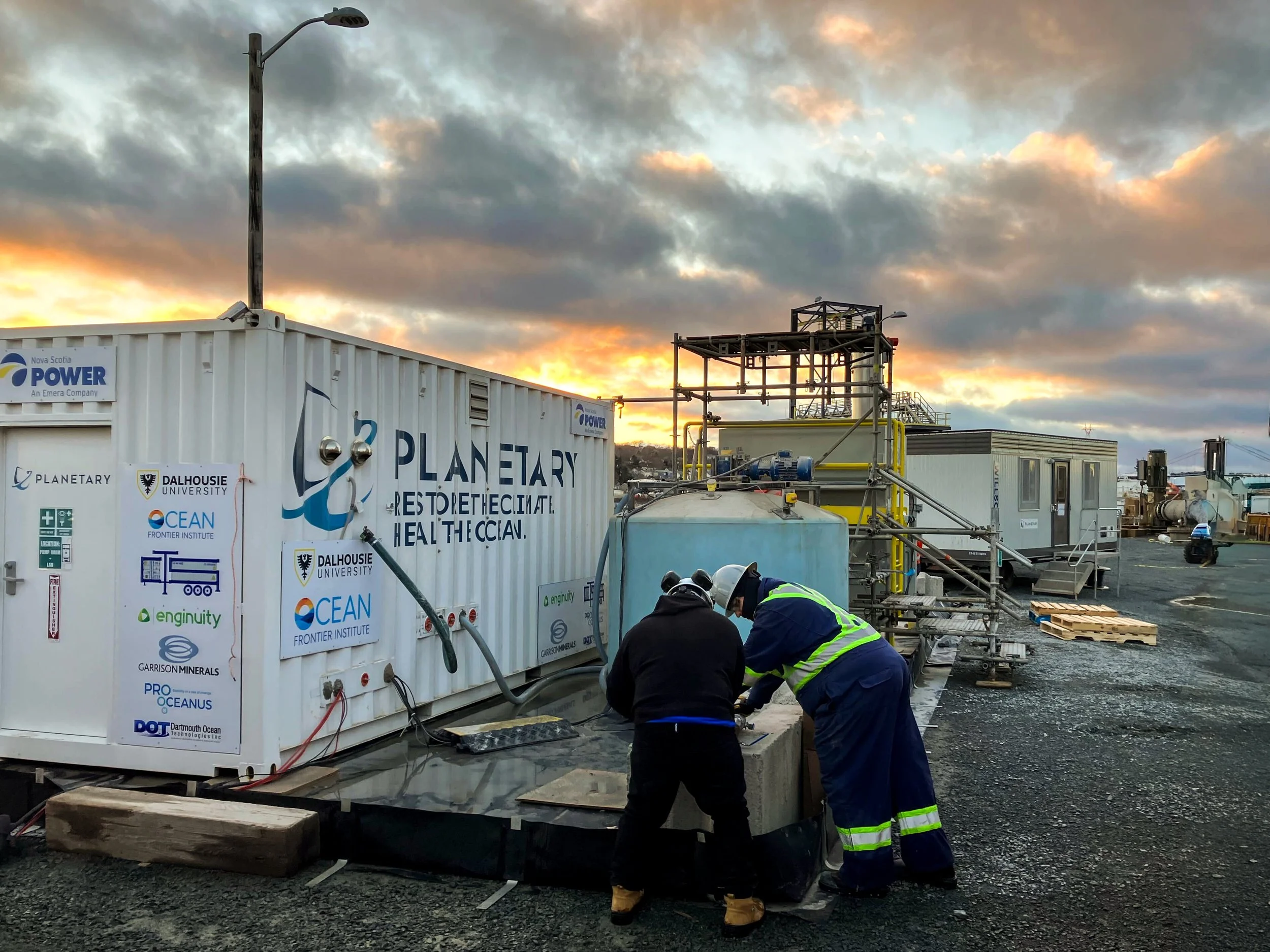
D. OAE communications in a Nova Scotian context
In Nova Scotia, it’s important to place Marine Carbon Dioxide Removal/Ocean Alkalinity Enhancement in a context — political, economic, cultural, and social. That is, in what public ecosystem will we deliver our messages and tell our stories? And to whom?
Nova Scotian/Atlantic audiences
The OAE sector is working to increase knowledge about this fast-growing industry amongst a wide range of stakeholders & rightsholders, including Indigenous communities, most notably Mi’kmaq and Wolastoqiyik groups. Very broadly, we can break communications work into two main audiences:
i. Those directly involved in the sector: businesses, non-profits, universities, funders, investors, scientists, credit market managers, supply chain companies, etc. Many of these stakeholders will be particularly interested in viability, efficacy, monitoring and verification, scalability, standards, safety, ROI, and related topics.
ii. Those involved in the creation and continuation of what is called ‘public social licence’ for OAE. This can be a wide range of participants, supporters, and influencers, including local municipalities and First Nations governments, local media, environmental groups, landowners adjacent to OAE sites, outdoor recreation groups, river associations, local businesses and enterprise networks, Indigenous organizations, etc.
One challenge, especially in industry-Indigenous relations, is that no sector can be independent of the broader social, political, and economic context. A history of inadequate or nonexistent consultation, environmental racism, discrimination, and limited local benefits from resource extraction can affect discussions, even when engagement is transparent and effective.
Most Indigenous groups support climate action while also cognisant of the environmental impacts of new technologies, especially on fisheries. Indeed, at the recent Carbon to Sea Convening in Halifax, Indigenous participants raised the issue of scaled-up OAE on fisheries numerous times.
The cultural resonance of water in Nova Scotia/Atlantic Canada: lessons from tidal power
When exploring marine-based technology of any kind, it’s important to recognize the deep emotional and cultural resonance in this province and region with water, whether oceans, rivers, or lakes. Given this significance, it may be useful to learn from a prominent example of the intersection of water and climate action in Nova Scotia: efforts to harness the power of tides for clean energy.
After a few hits and misses, and for the first time since 2018, it looks like Nova Scotia tidal power is again making headway. But let’s look back to 2016-17, when Nova Scotia saw intense media coverage of tidal power. Proponents of tidal power in Nova Scotia faced several communication challenges then (and continue to face). While tidal power technology is distinct from carbon removal, there are lessons to be learned. (The burgeoning offshore wind sector is another that warrants following from a communications perspective.)
> During 2016-17, opposition from several fishing groups coalesced and became much more vocal in the media. While some press contributed to a fact-based discussion, other coverage took (on the surface) a ‘balanced’ approach that you could argue left out important voices. An industry player, such as Cape Sharp Tidal/Emera, was generally paired with an oppositional voice, most often a group such as the Bay of Fundy Inshore Fishermen’s Association.
However, other voices, whether from government, supply chain businesses, or academia, were rarely included.
> Stories of this nature often pit a large ‘industrial’ player against a small-scale fisherman, and the emotive elements of the story can easily tilt towards the ‘little guy’. (This is not to imply that one side or the other is wrong, but rather to highlight the power of a human narrative.)
> Claims in the media that tidal power was using “industry-controlled junk science” were rarely countered or explored. If opposition voices arise against OAE, charges of ‘industry-controlled science’ could be levelled against those companies involved in water-based carbon removal.
> Some tidal power opposition took an emotional slant that can prove very effective in the public sphere. In particular, fishing is not just an industry; it is a traditional activity with strong cultural resonance. Therefore, it becomes something that transcends discussions of jobs; it’s a threat to a way of life and to coastal communities.
> While public surveys by Corporate Research Associates have consistently shown strong public support for tidal power, those surveys also found that “Nova Scotians strongly believe that any project must include environmental monitoring and be respectful of local fishing and Mi’kmaq communities.” That viewpoint is critical for marine CDR to embrace.
OAE is fundamentally different from tidal power and can be framed as supporting ocean health vs. the best-case scenario of no ocean harm in the case of tidal power. However, the lesson remains: the oceans and the fisheries many communities have traditionally relied on continue to exert a strong emotional and cultural hold on Nova Scotians. Be proactive when talking about OAE and ocean protection.
E. Challenges when talking about carbon removal
While OAE initiatives in Nova Scotia position themselves as forms of ocean health enhancement or river restoration, they are still prominently framed as carbon drawdown solutions. Are there communication challenges specific to carbon removal as a concept?
> Carbon removal and carbon capture are distinct climate strategies. Carbon capture prevents new emissions from entering the atmosphere (like a filter on a smokestack), whereas carbon removal extracts legacy CO2 already in the atmosphere. However, carbon removal is often equated with carbon capture, which has its detractors.
Critics argue that carbon capture and storage (CCS) is an expensive, energy-intensive distraction from phasing out fossil fuels. Some believe the storage side of the equation is too risky to the environment and local communities. Others argue that capture technology enables corporate “greenwashing,” justifying continued oil and gas production while siphoning government subsidies away from cheaper, proven renewable energy alternatives.
There have been instances in which mainstream media (for example, CBC in Canada and CNN in America) have used ‘capture’ and ‘removal’ interchangeably. Local Atlantic media have done this as well.
> Beyond mixing up capture and removal, there is a ‘moral hazard’ that can come into play as well; carbon removal could be seen as a potential distraction (and funds diversion) from GHG emissions reductions. This potential opposition to carbon removal highlights the moral and ideological elements of climate action, even if few, if any, advocates of CDR technologies would say carbon removal is intended to replace emissions reductions and the transition to renewable energy. It is one arrow in the quiver.
Some people may support carbon sequestration but believe planting trees—nature’s carbon-capture tool—is the best approach. However, it takes years for saplings to absorb large amounts of CO2. Companies like Planetary and CarbonRun will have to show that carbon removal technologies have the potential to quickly and safely reduce large amounts of CO2 emissions.
> Carbon removal is still an emerging sector: it is tech-diverse, and some projects will (appropriately) fail. But this could lead to perceptions that carbon removal is very costly, a ‘very expensive science fair experiment’. While some pilot projects and fuller-scale installations have successfully launched and indeed offered ‘proof of concept’, there is not a surfeit of these projects. Nor has there been an abundance of good news stories in the public sphere.
Some questions that could arise in public audiences could include:
o What if the technology doesn’t work?
o What if the carbon isn’t permanently stored?
o What if there are unintended ecological impacts?
A common refrain you hear from those involved in the carbon removal sector is the need to ‘scale up’, get more ‘large projects up and running’, and ‘expand to a planetary scale’. And while we do need rapid (and responsible) scaling up, when some people hear the word ‘rapid’, they may think ‘not tested’, ‘risky’, ‘unproven’.
> Related to the communications challenges on carbon removal, there is an important observation about how humans view ‘issues’: trust in the messenger is a key determinant of perception. Establishing trust is critical, and perceptions must be resolved before audiences can deal with the facts. Carbon removal companies are often described (or even self-described) as start-up tech companies and could be perceived within that frame.
The companies could be viewed as primarily seeking a new stream of profit/taking advantage of emerging carbon markets. For some audiences, the facts, projects, and stories will exist within that worldview. This is why having local champions — and not sounding too much like a ‘slick’ start-up — is important in the public (vs. investing) sphere.
Communications challenges unique to marine carbon removal
Going deeper into carbon removal, there are a few communications challenges that should be top-of-mind for OAE practitioners:
> Some of the technologies are challenging to describe succinctly: how is carbon removed from the air and into water? How does it combine with the added minerals to create bicarbonate? The challenge is to keep explanations simple but not simplistic, while staying true to the core science. (The heavy use of acronyms from OAE to mCDR to RAWE doesn’t help.)
> Perceptions trump reality, and certain words and frames could accentuate a negative. Some phrases used in the OAE industry, such as ‘dumping chemicals’ or ‘adding dust,’ can raise concerns in general audiences.
> The scientific method means experts talk not in absolutes but rather in terms of ‘as far as we know now’, ‘least impactful option’, and ‘change course as the data comes in’. Those who do not fully understand the scientific approach could interpret that as tech companies moving forward without enough evidence.
OAE communicators must have a strategy for how to:
o Talk about uncertainty without undermining trust
o Frame risk in a way that is honest but not alarming
o Distinguish between scientific uncertainty and public uncertainty
> Understandably, there is and will continue to be concern in some public corners that adding alkalinity to the ocean could harm ecosystems, even if the intervention is intended to reduce atmospheric CO2. There are also concerns about monitoring. Ocean alkalinity enhancement is especially hard to explain because it involves changing seawater chemistry, which can sound alarming to some.
Further, public familiarity with the science of ocean alkalinization is limited; much of the research literature focuses on ocean acidification rather than alkalinization, leaving an educational gap.
> Given the importance of the fisheries to Indigenous communities, OAE communicators must be prepared to answer specific equity considerations, such as
o Who benefits economically from OAE?
o How are Indigenous rights and jurisdiction respected beyond engagement?
o How are risks distributed?
o How can OAE projects support local capacity-building?
F. Communications assets available to carbon removal
Before offering some recommendations on talking about OAE/mCDR, there are several communications assets that carbon removal could take advantage of while building public social license:
> There have been several studies looking at public perceptions of carbon removal and carbon capture. A particularly useful one was a 2024 study on public perceptions on carbon removal from focus groups in 22 countries: the U.S. (but not Canada), European nations, and countries in the Global South. It was published in Nature Communications [https://www.nature.com/articles/s41467-024-47853-w]
The study examined perceptions of a representative sample of public segments on five major types of carbon removal (forests, soils, direct air capture, enhanced weathering, and bioenergy with carbon capture and storage).
Across the board, there were strong preferences for ecosystem-based approaches, often described as “natural” or “part of nature.” Participants further felt that so-called natural approaches were easy to understand technically, could occur in any country, and that ordinary citizens could personally participate in upscaling (e.g., as farmers or landowners), through civic initiatives, or alongside municipal or local government.
Some respondents highlighted co-benefits for biodiversity (rewilding, national parks), socio-environmental resilience (soil erosion, windbreaks), aesthetic and religious value, and for food provision. Compared to biogenic approaches, participants viewed tech such as direct air capture and carbon storage as more difficult to grasp technically, and potentially expensive and energy-intensive. NIMBYism also emerged, along with concerns about the safety of storage in deep-sea or subterranean reservoirs. Regarding technologies such as enhanced weathering, most groups found the technicalities of carbon drawdown and storage difficult to grasp.
In short, focus groups preferred biogenic carbon removal over engineered approaches. Participants from across the global North and South commonly questioned the need for carbon removal rather than reducing emissions in the first place. Some groups also voiced concerns about profit-seeking and greenwashing.
> In the eastern and Atlantic regions of Canada, there is a general understanding of the long-term impact acid rain has had on rivers. Because of this legacy, these rivers now need help recovering to their previous health. ‘Accelerating the rate of restoration in rivers’ is a strong message. With its dual emphasis on both carbon removal and river restoration, effective corporate storytelling can turn awareness of acid rain into a communications asset.
While there is understanding of acid rain and the impacts on rivers, there is less knowledge of how natural minerals can reduce the acidity in river water, reduce the effects of acid rain, and support the restoration of trout and Atlantic salmon habitat. However, a powerful asset is that two successful 10- and 15-year river liming projects led by the NS Salmon Association have already proven the technology is safe and beneficial for salmon populations.
Knowledge of ocean acidification (and its causes) may be less widespread than acid rain in rivers, but this awareness is growing. Acidification offers a (sad) but potentially strong opening for OAE communications, especially when talking about co-benefits. Co-benefits are beneficial outcomes that include cleaner air, green job creation, public health benefits, economic fairness, First Nations reconciliation, biodiversity improvement, and even regional pride. That said, the main threat to oceans remains climate change, and focusing on the main benefit of carbon removal for the climate and oceans remains a powerful framing for our work.
> The Federal Government is sending strong signals of importance through both public statements and financial commitments (e.g. a carbon removal procurement fund as well as support for entities such as the Carbon to Sea Initiative). Similarly, the Nova Scotia government is supporting the carbon removal industry.
> Nova Scotia has many well-respected universities involved in carbon removal and climate research. Well-respected academics and researchers speaking in the public realm help build credibility.
> Carbon removal is not a short-term fix; it’s about long-term storage and an approach to offset hard-to-abate carbon emissions. Climate anxiety is a window of opportunity for carbon removal, as the sector could address legacy emissions.
Many people are desperate for realistic solutions. Carbon dioxide removal could, in theory, help drive down temperatures; carbon capture only helps limit temperature rises.
G. High-level communications recommendations
OAE companies and organizations are working to clearly communicate values, demonstrate leadership, and build public awareness & support for marine carbon removal. The recommendations stemming from the communications and engagement work of New Bridge, Planetary, and Ocean Vision highlighted earlier in this paper are excellent, and to those I would say ‘ditto’. Effective communication is key to clearing obstacles and building greater public trust. What follows are a few additional high-level thoughts on communicating around OAE:
> It almost goes without saying that when we communicate, we need to understand our audience, their values, and their challenges. Context is as important as content. OAE practitioners talk about baseline scientific data; we also need baseline social, cultural, and political data before we engage.
> What’s in a name? In this sector, the question should be: What’s with all the names? Many are used for the same or similar concepts: Ocean Alkalinity Enhancement (OAE), the related River Alkalinity Enhancement (RAE), and Marine Carbon Dioxide Removal (mCDR), amongst them. Some groups use full names rather than acronyms, such as Ocean-based Climate Solutions, Direct Ocean Capture, and Ocean Carbon Removal. Some advocate modifying or adding to existing acronyms to further distinguish them; for example, Land-based Coastal OAE, which more accurately describes work such as that done by Planetary. (Planetary doesn’t operate in the open ocean, an important distinction.)
Public relations research is currently being conducted in the Carbon to Sea world to explore potential new names, so this is not a repeat of that. If I were asked, I would advocate for a simple yet full name like Ocean Climate Solutions or Marine Climate Solutions, or a name whose acronym has meaning or auditory appeal, such as Natural Ocean Enhancement (NOE) or Ocean Carbon Removal (ORC). (It should be noted here that in the U.S., ‘marine’ can be confused with the military branch, so ocean-based may be more appropriate.)
Regardless, we should frame carbon dioxide removal in more public-friendly terms, if not in name, at least in description. In the case of ocean alkalinity enhancement (OAE), the term itself is relatively technical. Most public-facing communications will need additional explanatory phrases, such as “ocean-based carbon removal” or “a method to remove carbon dioxide by improving the health of oceans.”
Further, good public practice would be to define the concept first in plain language, then introduce the technical term if used (e.g., OAE, mCDR). That way, we frame the technical term in simpler language, such as “carbon durably removed from the atmosphere” and “ocean carbon removal pathways.”
> In our communications, be aware of (and add concise descriptors for) potentially unclear or concerning concepts/phrases such as ‘technology that is scalable and safe’, and ‘addition of natural materials to improve ocean health.’ It’s key to clearly communicate (based on evidence) that these unique processes are safe, environmentally beneficial, cost-effective, and have a small localized ecological footprint. Use of ‘nature’ and ‘natural’ can be highly effective in building social license. A meta-narrative is that river and ocean carbon dioxide removal methodology is a ‘soft touch solution that gets out of the way and lets nature do the hard work’.
> When appropriate, position OAE businesses as not just technical and innovative, but also as mission-driven companies that are part of the climate solutions movement. Increasingly, people support (and put their dollars into) movements rather than specific organizations or businesses. And the climate crisis is also an ocean crisis. The discourse on climate change generally focuses on mitigation (the category I would place carbon capture in) and adaptation. The argument can be made that carbon removal is its own category, a third pillar of climate action to remove legacy carbon.
> With a general public audience (as distinct from a specialized audience such as an investor or customer), it’s often best to start at the end and work backwards. That is, start with a healthier ocean or river — and what that means for the climate, which in turn helps our waterways — and work backwards to show how an OAE company helps make that happen. But, of course, we need to be realistic, honest, and not promote CDR at the expense of GHG emissions reductions. A range of solutions is needed to reduce our carbon footprint and protect our waters.
> As has been discussed by many, showcasing climate solution co-benefits (such as ecosystem health, green jobs, Indigenous reconciliation) resulting from mCDR technologies and processes can be an entry into positive public perception. But to repeat a point already made, the main threat to oceans remains climate change, and focusing on the main benefit of carbon removal for the climate and oceans remains a powerful framing of our work.
> Become storytelling businesses and organizations, leveraging good news, credible messengers, and stories of the possible. When appropriate, start with a good news story before getting into too many details about the science. But while it’s critical to simplify and explain in common terms, we must also stay true to the science. Use testimonials (from local partners, scientists, etc.). Embrace multiple storytelling formats: print, video, photography, and infographics. The goal is to build strong relationships with your stakeholders and, over time, a thriving community of champions.
Most people can’t conceptualize what a tonne of carbon dioxide actually is, so it may have little meaning. When possible, try to give understandable equivalents. For example, when Planetary Technologies says they have removed 4,853.6 tonnes of carbon dioxide, they often add that “…this is roughly equivalent to the carbon sequestered by about 5,000 acres of forest in one year.”
> There has been, and continues to be, excellent analysis happening across the mCDR world on messaging and how to talk about ocean-based climate solutions to various audiences. These efforts won’t be duplicated here, but it’s useful to reinforce the words to consider avoiding or using with caution/explanation:
o Dust. Sometimes, OAE projects refer to their additives as ‘dust’. That word, however, can evoke images of dirt, pollution, and particles that could settle on ocean bottoms and river bottoms or be ingested by fish. Instead, talk about natural materials, restoring what has been lost as a result of climate change, or returning the ‘antacid’ materials that have been lost. “Slurry” is a similar word that could have negative connotations.
o Dumping. While accurate in many ways, it brings up negative connotations. Instead, talk about natural additions. We are accelerating a geological process called rock weathering, which has naturally regulated the Earth’s carbon cycle for millennia. Disposal, waste, tailings, and effluent are additional words that can elicit negative responses to OAE work.
o Permanent. This is often used in the sector as in ‘permanent storage’. But for those unsure about the technology, the word 'permanent' could raise concerns. Use permanent where appropriate; otherwise, use durable, long-term, long-lasting, thousands of years, etc. It should be noted, however, that OAE approaches capture and durably store carbon dioxide for over 20,000 years, a key advantage over other carbon removal approaches that require separate storage.
o Scale-up. Though often used and appropriate for most audiences, it can give off ‘entrepreneurial start-up’ vibes, which may not be ideal for others. Also, some people get concerned about safety when they hear ‘scale-up’ without context. We may want to instead talk about ‘deepening our impact’, ‘expanding our climate solutions’, etc. Fortunately, many OAE groups are cautious when using the term ‘scalability’, and are upfront about the need for more research before widespread scale-up.
H. Principles for OAE Communications
Effective communication about Ocean Alkalinity Enhancement (or whatever we may call it!) requires more than explaining the science. It requires meeting people where they are — emotionally, culturally, and socially — and building trust through clarity, transparency, and shared values. Here are some principles to consider that can help guide communicators, practitioners, and partners as they engage communities, policymakers, and the broader public:
1. Lead with values, not technology. Most people do not connect first with chemistry or engineering; they connect with what matters to them. In the case of the mCDR sector, that could be healthy oceans, thriving fisheries, and a livable climate for future generations. Begin with these shared values before introducing the technical aspects of OAE. Values create the foundation on which understanding can be built.
2. Be transparent about uncertainty. Uncertainty is not a weakness; it is an honest reflection of how science progresses. Communicators should be clear about what is known, what is still being studied, and how monitoring and adaptive management reduce uncertainty over time. Transparency builds credibility and helps prevent misunderstandings or inflated expectations.
3. Emphasize monitoring, oversight, and accountability. People want to know that OAE is being developed responsibly. Highlight the regulatory frameworks, scientific review processes, community oversight mechanisms, and third‑party verification that guide OAE projects. Demonstrating strong guardrails helps audiences feel confident that risks are being managed and that learning is continuous.
4. Connect to local identity, culture, and livelihoods. In Nova Scotia and Atlantic Canada, water is identity, history, and livelihood. Effective OAE communication should reflect this reality. Show how projects align with local priorities, respect Indigenous rights and knowledge systems, and support the long-term health of fisheries, coastal communities, and marine ecosystems.
5. Highlight co-benefits without overselling. OAE may offer benefits beyond carbon removal, such as supporting ocean health or contributing to local economic development. These co-benefits can be powerful motivators, but they must be communicated with scientific accuracy and humility. Overstating benefits can erode trust; grounding them in evidence strengthens it.
6. Use trusted messengers. Who delivers the message can matter as much as the message itself. Local leaders, Indigenous partners, fishers, scientists, youth, and community organizations often carry more credibility than companies or outside experts. Elevating diverse, trusted voices helps ensure that OAE is understood within the social fabric of the community.
7. Avoid jargon and acronyms. Terms like “mCDR,” “alkalinity,” or “enhanced weathering” can be confusing or intimidating. Use plain language and relatable metaphors to explain how OAE works. Replace technical shorthand with clear, accessible descriptions that help people visualize the process and its purpose.
8. Show — not just tell — how OAE works. People learn best through concrete examples, visuals, demonstrations, and stories. Site tours, videos, diagrams, hands-on activities, and transparent reporting all help make OAE tangible. Showing the process, the monitoring, and the people involved builds understanding and trust far more effectively than abstract explanations.